Home Blog Page 50

Supporting Your Metabolism: Three Key Elements To Consider

biology skeleton

Metabolism is essentially the balance of chemical reactions that keep your body functioning healthily. There are both anabolic (building) processes and catabolic (breaking down) processes, and both are important. 

You’ve likely heard the term batted around in health circles, with specific suggestions being made for those with a ‘low’ or ‘high’ metabolism based on complaints around weight loss, appetite, and so on, but many articles use terms incorrectly, and things can get confusing quickly. 

Rather than focusing on buzz words, in this article, you’ll learn about three key elements shown to support your metabolism over the long term.

1.  Diet Composition

Diet is likely the element of human health you’ve heard to be most commonly associated with metabolism, and with good reason. You are what you eat, as they say, and there’s actually a lot of truth to that. 

The macronutrients (protein, carbohydrates, and fat) and the micronutrients (vitamins and minerals) both contribute considerably to how your metabolism operates, as they’re required for the enzymatic reactions that regulate it. 

Take protein as just one example. This macronutrient is responsible for switching your body from a catabolic state into an anabolic one, whereby you’re able to adapt and build muscle following bouts of resistance exercise. 

Fiber-rich diets with plenty of fruits, vegetables, high-quality proteins, and healthy fats are best for overall health, and there are also metabolic support nutritional formulas that have shown promise (but always talk to your doctor before consuming these). 

2. The Importance of Sleep

Sleep is also a key factor in a healthy metabolism. When you have poor sleep, hormone production is disrupted, with cortisol (the stress hormone) being elevated. Those like leptin and ghrelin (which regulate hunger and appetite) are also usually at unfavorable levels when this happens, and the result is poor mood and hunger. 

You should always prioritize getting 7–9 hours of sleep each night, and do your best to manage your stress levels throughout the day. If you’ve been stressing all day, you’re going to find it difficult to switch off and rest, so it’s a good idea to do some relaxation meditation beforehand to prime your brain for sleep. 

3. Physical Exercise

Everyone knows that exercise is good for you, but research is just scratching the surface in terms of the truly profound effects it can have. 

When it comes to metabolism, exercise has one of the most powerful influences of all. Resistance training is incredibly beneficial for building metabolically active tissues, while aerobic (cardiovascular) exercise helps the body to utilize insulin more efficiently and enhances cell function. 

Even light exercise, such as walking or slow cycling, can be much more powerful than you might initially expect, so you don’t have to jump right into vigorous training regimes right away.

Wrapping Up 

Hopefully, you now feel a little clearer on how to support a healthy metabolism. There’s much more to it than this, of course, as any human biology subject is incredibly complex, but the above points should be enough to get you started. Good luck!

Photo by MART PRODUCTION

How Smartphones Rewired Sports Fandom

sports fan

A match used to live in one place. It lived in the stands or on the sofa, with a pint nearby and a single screen doing the heavy lifting. A smartphone changed that rhythm. It sits in your palm like a spare set of eyes, ready to serve clips, stats, and chatter the second the ball goes out for a throw. It feels like the sports version of a post credit scene, since you keep checking for the next little reveal.

Smartphones also turned tuning in into a moving target. You can watch live, then you can stream highlights a minute later, then you can argue about it in real time. That shift brings in social media and betting as companion activities, because both thrive on speed and shared attention. Research companies and regulators track the same story from different angles, and the numbers keep pointing to the phone as the new control room.

The second screen became the habit

A lot of fans now watch sports while doing something else on a phone. Nielsen reported that 47% of people who watch sports on TV or digital platforms also watch other live content at the same time, and it reported higher multi-screen activity among sports viewers than the general population. That behaviour shows up in the usual match night scene, where you check a replay angle, then you scan a stat, then you send a message.

This is also where betting fits in as a phone native add on to watching. A fan can watch a game, then check prices, then place a small wager inside a few taps, and that’s the context where Betway betting becomes a casual phrase in group chats about how people follow the action while they watch. Betting participation data in Great Britain shows many adults take part in gambling activity, and it also reports online participation across activities, which frames why betting often sits within the same phone routine as sport media.

Streaming and highlights changed the shape of “watching”

Sports “viewing” now includes a lot more than the live broadcast. Fans consume previews and recaps, then they follow short clips that keep the story moving between match days. Ofcom reported that people spent 4 hours 31 minutes per day watching video content at home in 2023, and it reported growth in online video alongside a fall in live TV viewing time. That shift supports the idea that sports competes inside a wider video mix, rather than sitting alone at the top of the menu.

Nielsen also described strong demand for sports content related to live events, like highlights and recap videos, in research drawn from its fan insights work. That helps explain why leagues lean into clip rights and vertical video formats. Your phone turns into the place where the match keeps happening, even after the whistle.

Social media turned every match into a group chat

Social media made fans feel present even when they watch alone. The phone lets you react instantly, and that reaction becomes part of the broadcast experience. Nielsen reported growth in usage for platforms such as TikTok and Twitch for sports news and content in a global report, which fits the rise of highlight first fandom. Fans also use messaging apps for live commentary, and that can feel like sitting with friends who type faster than they speak.

Academic work on “social second screen” behaviour looked at WhatsApp use during World Cup broadcasts, and it treated that messaging layer as part of how people experience major matches. The phone creates a shared room, even when the viewing happens in separate houses. You get a mix of jokes and instant takes, and that mix makes the match feel like a live social event.

Betting became part of the live conversation

Sports betting used to sit in shops or in pre-match rituals, then smartphones pulled it into the moment to moment flow. Live betting markets update rapidly, which makes the phone feel like a second scoreboard that also prices the match. The practical impact shows up in how fans talk. They discuss form, then they discuss odds, and the line between “watching” and “tracking” gets thinner.

Regulators and public bodies focus on participation and consumer experience, and Gambling Commission participation statistics give context for how common gambling activity is in Great Britain. Those figures help explain why betting content sits close to sports content on phones. Betting also creates a reason to stay engaged across the full match, because a late corner or a stoppage time goal can matter in more ways than the table shows.

What smartphones changed for broadcasters and leagues

Broadcasters and leagues adapted to the phone because the phone holds attention in a different way. A TV broadcast delivers the main picture, and the phone delivers detail and reaction. That split pushes broadcasters to add on-screen prompts and data overlays that match what fans already search on their phones. It also pushes leagues to package content in smaller pieces that travel easily across feeds.

The same dynamic changes sponsorship value. When a fan watches and scrolls, they see more brand messages across more surfaces. Nielsen research on fan engagement highlights multi-screen behaviour and the broader set of activities people do while watching sport. That shapes how rights holders sell packages, since sponsors want reach across live viewing and the phone based afterlife of highlights.

A quick guide to tuning in well on a phone

  • You can pick one “second screen job” for your phone, then keep it steady for the match. You might choose live stats, or you might choose social chat. A single job keeps your attention cleaner, and it keeps the match enjoyable rather than frantic. Nielsen’s multi-screen data shows many viewers stack activities, so a deliberate choice helps you shape the experience.
  • You can treat betting as an add-on rather than a director of the night. A simple plan for stake size and bet count keeps the activity contained, and it keeps the match as the main event. Participation statistics from the Gambling Commission give the broader context that many adults engage with gambling, which makes a personal routine a practical tool.
  • You can use social media for discovery, then switch to direct sources for confirmation. Clips travel fast, and rumours travel faster, so a quick check against a league account or a broadcaster update keeps you aligned with what actually happened. Ofcom’s reporting on the growth of online video helps explain why clips flood feeds during big events.

Building with Steel: The Pros And Cons

steel building

When planning a construction project, one of the first big questions you’ll need to answer is: what should it be made from? Timber, brick, concrete, steel – each has its own strengths and drawbacks. 

Steel remains one of the most popular choices for commercial projects. You’ll see it commonly used for everything from warehouses to skyscrapers. And while not as popular as brick and timber for homes, it is becoming more commonly used in modern-styled new builds. 

Strength, sustainability and speed of construction all make steel a favored material choice. However, it’s not perfect for every project. To help you decide whether steel is the right pick for you, here is an in-depth look into the pros and cons of this material. 

Pro: It’s fast to build with

Steel is a good choice for construction projects with short timeframes. Many steel buildings now use prefabricated components – which means parts are able to be manufactured and sometimes partially assembled in a factory. Once they reach the construction site, it’s a simple case of bolting it all together. Skilled crews are needed to build with steel, but it’s a highly repeatable process that’s not as labor intensive as bricklaying or carpentry. Weather disruption is also reduced because much of the work is done off-site. All in all, expect build times 30% faster than using timber, and 100% faster than using brick. 

Con: It can cost more than other materials

While fast construction does make it possible to save money on labor, you could find that a steel building still costs more than a timber one simply due to the higher price of steel. More precise engineering is also required during the design phase, plus working with steel can sometimes require a greater number of machines than you might use when building with timber. Researching into the costs will give you a good idea as to whether a project is feasible on your budget (you may still save money compared to using materials like brick).

Pro: It’s incredibly durable

Steel outperforms many materials when it comes to durability. When properly designed and protected, steel buildings can last for decades without much maintenance. You’ll often find steel used to build structures in locations that experience extreme weather or natural disasters – not only can steel hold up against strong winds, but it can also stay intact when exposed to wildfires or seismic activity. Pests like termites and rodents also can’t chew through steel like they can through timber. In the case of factory applications, steel floors can also support heavy equipment and absorb vibrations well.

Con: It can be prone to corrosion

As robust as steel is, it has one kryptonite: corrosion. Exposure to salty and moist air can encourage rust to take hold of steel if it is not protected. Steel structures in coastal areas are particularly vulnerable for this reason. How do you protect steel from corrosion? Galvanizing it (using a zinc coating) can help form a barrier. You can also apply various paints to fend off rust, but these finishes may need to be reapplied over time. How metal structures are designed can also reduce corrosion – for example, corrugated roofs are designed to encourage drainage, which prevents sitting water from inviting corrosion. 

Pro: It’s largely sustainable

The production of steel has historically been associated with heavy carbon emissions. But modern manufacturing methods such as use of renewable energy and green hydrogen have greatly reduced the negative environmental impact of steel production. The increased use of recycled steel has been one of the biggest gamechanger – steel can be constantly recycled and reused without major degradation, and many modern steel projects now heavily use recycled metal, reducing demand on the production of new steel.  

Con: It offers little sound insulation

If you’ve ever been in a building with a steel roof when it’s raining, you’ll know how noisy steel structures can be. If you’re designing a building where encouraging a peaceful environment is important, consider whether steel is the right choice. Factories made of steel can also sometimes amplify sounds from machinery, leading to unhealthy noise levels. Fortunately, installing acoustic insulation can help to reduce this noise – this can be done using drywall or mass-loaded vinyl.

Pro: It can be molded into various shapes

Architects love steel because it opens up design possibilities that are difficult or impossible to achieve with other materials. Steel can be used in much longer spans than other materials and can be easily curved into arches and sweeping roofs. Its strength-to-weight ratio also allows steel to be shaped into very thin layers that remain very tough. On top of this, steel integrates very well with other materials – glass, timber and concrete can all be neatly fitted into steel frames to create striking hybrid designs.

Con: It’s susceptible to temperature changes

Steel is very reactive to temperature changes, getting very hot in the heat and very cool in cold weather. Unless a steel building is properly insulated and ventilated, you could find that it gets very hot inside in summer and very cool indoors in winter. Of course, HVAC can help to regulate the temperature indoors, but you may find that a lot more energy needs to be consumed to heat up and cool down a poorly insulated steel structure. Ways to insulate a steel building include spray foam insulation, fiberglass blanket insulation, and rigid foam boards. 

Should you build with steel?

Building with steel comes with an impressive list of benefits: fast construction, durability, sustainability and design flexibility. However, you’ll need to be prepared for high upfront costs – which could include factoring in applying corrosion protection, adding acoustic insulation, and installing thermal insulation.

If you’re looking to design a long-lasting building with big open spaces or intricate curves on a tight schedule, then steel is an excellent choice. Work with an experienced steel construction company that can help bring your vision to life, and consider how you may be able to integrate steel with other materials to reduce some of the cons. 

Photo by Gamze Nur Zararsız

How to Not Let Business Debt Drown You

business finances

Business debt can sometimes feel like a rising tide. It’s manageable at first, but then it suddenly laps your ankles when you’re not paying attention. Debt doesn’t have to drown your business, and most companies do carry some level of debt at various stages. The trick is knowing how to stay afloat when that debt starts to pile up. You need to be able to keep control of the situation, and the first rule of debt survival is awareness. You don’t need to pass this over to your accountant while you ignore it. This is something that you need to be very hands on with.

Reaching out to lenders, renegotiating your terms, seeking professional advice and doing all of this before things feel urgent will open up more options and reduce the pressure on you. You’re grabbing a life jacket instead of waiting for the water to rise, and regular check-ins on your finances will help to ensure that your debt stays a tool rather than a trap.

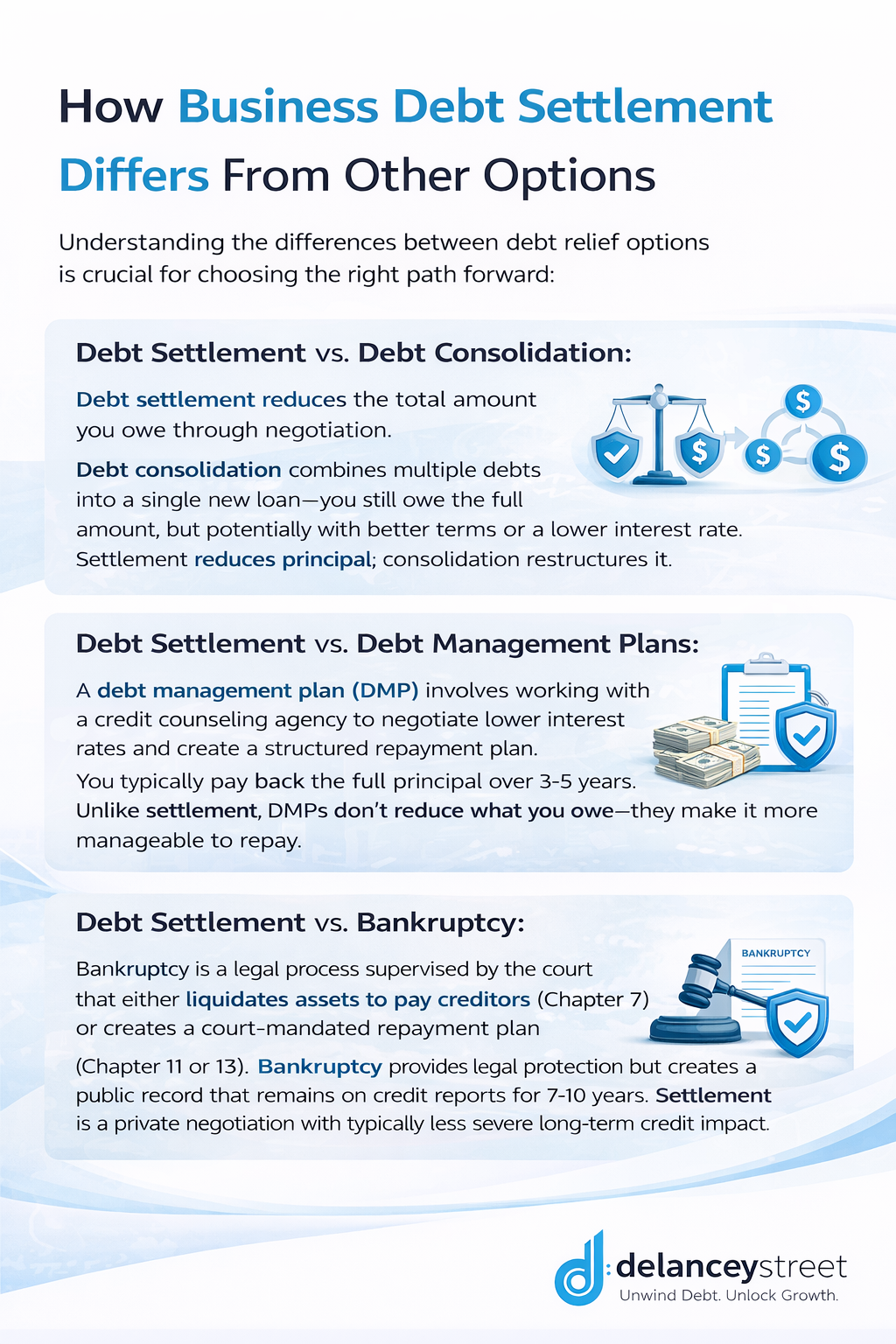
Business debt doesn’t have to trip you up. With the right mindset and a clear plan, you’ll be able to keep moving forward. And the infographic below can help you with getting out of your business debt in the first place. 
Infographic designed by Delancey Street
Top photo: Image by StartupStockPhotos from Pixabay

The Value, the Power, and the Leverage of Silence

The Value, the Power, and the Leverage of Silence

By Florida Night Train

On a motorcycle, silence is not the absence of sound.

It’s the moment when noise becomes information.

There are stretches of road where easing off the throttle… just slightly… offers more clarity than acceleration ever could. You begin to feel the pavement instead of merely riding over it. You sense the crosswind before it nudges you off line. You see the curve ahead not as an obstacle, but as a sequence–an entry, an apex, an exit. Speed has its place, but wisdom lives in restraint.

Experienced riders understand this instinctively. Control is not constant input. It’s knowing when to act, when to wait, and when to let the machine and the moment speak first.

Life works the same way.

Silence is often misunderstood. It’s mistaken for hesitation, weakness, or disengagement. In reality, silence is leverage. It is the discipline of observation; the refusal to fill space unnecessarily, to perform on cue, or to force clarity before it is earned. Silence creates distance, and distance reveals truth. It drove my ex nuts when we talked. She expected my answers quick. I would reflect and think before answering at all. Drove her mad—lol.

When you step back, patterns emerge.

You begin to notice what isn’t being said. You watch actions instead of listening to explanations. You observe demeanor, consistency, and how people behave when they believe no one is managing them. In silence, truth becomes economical. It doesn’t argue. It simply shows itself. And it’s so intoxicatingly peaceful!

There is elegance in the unknown. A quiet satisfaction in letting time and circumstance do the talking.

We live in an age obsessed with immediacy: instant reactions, constant commentary, emotional reflex. Noise is mistaken for confidence. Volume is confused with conviction. Silence cuts through that illusion. It lowers emotional RPMs. It removes distortion. It allows situations to breathe long enough for clarity to arrive uninvited.

Prettiness is easy. Surface-level signals are everywhere. Distracting and devastating for the fool on a long term but distracting, yes, and short-lived for the discerning one.

What matters lives beyond the first layer. It shows up in how someone carries themselves when they are not performing. In how they listen instead of waiting to speak. In how they handle pressure without spectacle. In how they behave when attention is no longer guaranteed.

That is where class reveals itself.

Restraint.

Humor.

Depth.

And most importantly, self-respect.

Silence becomes indispensable in the places where damage is done most efficiently: friendships, relationships, religion, and politics.

There was once a practice built on restraint and discernment rather than performance…courtship. Not persuasion. Not posturing. Observation over time. It is largely extinct now, replaced by speed, entitlement, and emotional noise. And yet, when honored, it spares the soul. Mine included, as of recently, from a Wilderness I would have otherwise been swallowed whole.

Silence exposes intentions long before language ever does.

Nowhere is this more necessary than in religion and politics; two tools meant to serve, now routinely weaponized. Both claim virtue. Both promise order. And both, when untethered from humility, become monsters made by men. These are not divine or civic failures. They are human ones.

Legions of demons do not arrive with horns. They wear tailored suits, religious vestments, curated slogans, and borrowed moral authority. They speak endlessly of compassion, justice or social justice, righteousness, and truth… while quietly feeding bitterness, judgment, and appetite for control. Silence is how you spot them.

The loudest voices are rarely the wisest. The most morally certain are often the least examined.

Silence does not debate ideology, it watches behavior. It observes who needs constant affirmation, who thrives on outrage, who demands allegiance before earning trust. It separates conviction from vanity, faith from performance, leadership from hunger.

In that way, silence is not passive, it is protective. It denies agitators their oxygen and exposes their violence. It prevents allegiance from being handed to those who have not earned trust through consistency, humility, hard work, good values, and action. Those who feel entitled and prey on the vulnerable who are easily manipulated by guilt through virtue signaling.

On the road, overcorrection is what gets riders into trouble. The same is true in life. Too much input at the wrong moment creates instability. Silence acts as traction. It grounds judgment. It allows for small, intelligent adjustments instead of dramatic reactions.

Seasoned riders understand that mastery is quiet. The most capable among them are rarely the loudest. They don’t announce speed or skill. Their movements are deliberate. Their margins are intentional. They ride with awareness, not bravado. They don’t boast. They stay humble.

Life rewards the same posture.

Silence does not mean inaction. It means intentional action timed correctly. It means waiting long enough to see the whole road, not just the next turn. It means trusting that clarity does not require force, only patience.

In a world addicted to noise, silence becomes a differentiator. It signals self-command. It signals discernment. It signals that you are not desperate for validation or momentum, you are committed to direction.

And direction, once clear, rarely needs explanation.

On the bike, you don’t fight the road.

You read it.

In life, silence teaches you to do the same.

Because silence doesn’t weaken your position… it reveals it.

5 Ways to Ensure Your Industrial Equipment Lasts

industrial equipment

Industrial equipment is a vital part of many different industries, including construction work and manufacturing. It’s also expensive. While you can rent heavy machinery and other equipment, if you need to use something all the time, you’re better off buying it.

There are a few ways to save money when using industrial equipment, including procuring second-hand, or only investing in equipment that your company actually needs. But one of the most effective ways to not only save money but also ensure that your business maintains a high level of productivity is to make sure your equipment lasts as long as possible. 

Here are a few ways to extend the lifespan of your tools.

1. Purchase Appropriate Equipment

Improving the lifespan of your equipment starts with purchasing. While second-hand products are cheaper, it’s important to check the history of what you buy to make sure you won’t need to replace it soon.

Only invest in equipment that has a good reputation for reliability and is suited for the task at hand. 

2. Proper Equipment Storage

There will be times when you aren’t using certain equipment. Proper storage can keep your machinery going for longer by preventing rust and other damage. 

Always clean machinery that will be stored, then keep it in a clean, dry, and indoor location. Secure any loose attachments and, if it contains a battery, remove the battery to prevent unnecessary discharge. 

Finally, lock it up. Heavy machinery and expensive equipment are attractive to thieves, so keep them secure.

3. Employee Training

If heavy machinery is misused, it can be dangerous to the user, anyone around the user, and the machinery itself. Always make sure that any heavy machinery is operated by someone who has the appropriate training. Otherwise, you could be considered liable for any damages.

4. Regular Maintenance Schedules

Over time, machinery and equipment will suffer wear and tear. You can’t use it constantly and expect it to be fine. Breakdowns can be expensive, as they put necessary machinery out of commission for longer periods of time and they can also be more difficult to repair.

While you may have been able to repair minor damage and keep something going by shutting it down for maintenance, when it breaks down, you may need to replace parts or even a whole piece of equipment. 

5. Replacement Parts for Quick Repair

During your regular maintenance checks and repairs, or perhaps if something has broken down, you might notice some parts are damaged or even missing. Screws are a very common part that have a bad habit of disappearing, which makes your equipment less durable. When it comes to industrial equipment, even a few small screws can make a lot of difference.

It’s best to be able to order parts like socket head cap screws as quickly as possible or even to keep a supply of these screws, especially if you know they’ll be needed. If you’re manufacturing or designing custom machinery, you can also order custom screws for the best possible fit.

Photo by Mikhail Nilov

5 Practical Tips to Create an Office Space Your Employees Love

office space

Businesses need to have an office space for their employees, but that doesn’t mean your company should just toss a few desks and chairs together and leave it at that. You’ll need to create an office space where your employees are happy and can work productively.

This often takes a lot more time and effort than people realise. But, it doesn’t need to be overwhelmingly hard. With the right office design tips, it could be a breeze. Some of these could end up having a lot more impact than you might think.

Update the Break Area

A break area is always worth investing in early, as it gives your employees somewhere to unwind when they’re not actively working. It will also help make sure they’re not bothering anyone who is working. You can get plenty of equipment and furniture for your break area, like tables, water dispensers, and appliances. Have everything your employees will need.

Prioritise Natural Air and Light

Your office space needs to be a healthy place for your employees to work, and quite a few factors play a role in this. Natural air and light are some of the more notable as they affect the air quality and overall working environment. Aim to let as much of these in as possible. Investing in larger windows and similar areas whenever you can is a great step for this.

Get Ergonomic Furniture

Desks and chairs will be a natural investment with your office space, but don’t just go for the most affordable options you can find. Your employees will need to use these constantly, so it’s worth making sure they’re comfortable while avoiding any potential aches and pains. Ergonomic furniture, while a little more expensive, is worth getting to make sure your employees are happy.

Optimise the Storage

You could need to store more than a few items around your office, ranging from supplies to confidential documents and a whole lot more. Keep this in mind when you’re creating the office space so your storage isn’t in the way or bulky. If you need to invest in physical storage, wall-mounted shelving and mobile storage units can always be worth it.

Let Employees Personalise

Your employees will all have their designated work areas or desks, and it’s worth letting them personalise it. While they might not be able to go overboard for various reasons, there’s more than enough they can do. Desk accessories, family photographs, and similar small touches helps add more personality and makes your employees more comfortable.

When starting your business, you may need to create an office space for your employees from scratch. While getting this done in a bare space seems complicated, it doesn’t need to be.

A few office design tips could be more than enough to help with this. Add in a few other tricks and there shouldn’t be anything to worry about. You will end up with an office space you and your employees can work productively and happily from.

Photo by Rodeo Project Management Software on Unsplash

Michael Judkins Releases New Poetry Book, Deeper Than You Think

A powerful book of exploration of identity, healing, and the unseen emotional landscapes that shape our lives

Acclaimed poet, storyteller, mental health expert, filmmaker, and creative visionary Michael Judkins announces the release of his newest poetry book, Deeper Than You Think, a compelling and emotionally resonant work that invites readers to look beyond the surface of personal experience, pain, love, and transformation.

In Deeper Than You Think, Judkins blends poetic insight with raw honesty, guiding readers through themes of self-reflection, resilience, mental and emotional depth, and the quiet truths we often avoid confronting. The book challenges audiences to slow down, listen inward, and recognize the deeper meanings hidden within everyday moments and human connections.

Known for bridging art and healing, Judkins’ writing speaks directly to readers seeking authenticity, self-awareness, and emotional clarity. His work has resonated across literary, wellness, and creative communities, earning him recognition as a voice that is both accessible and profoundly moving.

“This book is about what we carry beneath the surface—the thoughts we don’t say out loud, the stories we live with, and the healing that begins when we finally face them,” says Judkins.

Deeper Than You Think is positioned to resonate with poetry lovers, readers interested in personal growth, educators, creatives, and audiences engaged in conversations around emotional wellness and self-discovery. The release also supports Judkins’ ongoing work in spoken word performances, interviews, and interdisciplinary creative projects.

The book is now available through https://linktr.ee/DeeperThanYouThinkMBJ.

About Michael Judkins

Michael Judkins is a poet, author, and creative storyteller whose work explores the intersection of art, emotion, and human connection. Through poetry, film, and live conversation, Judkins creates spaces for reflection, healing, and meaningful dialogue. His work continues to reach diverse audiences across literary, cultural, and educational platforms.

Media & Booking Inquiries:

Beatrice Davis

vspbea@gmail.com

312-933-5744

https://oct14entertainment.com/

Queen Sheba Feature on Artist’s Voice

In this episode of The Artist’s Voice, poet and spoken word artist Queen Sheba reflects on her Grammy nomination in the spoken word category, the two years of dedicated creative work behind it, and her recording “A Hurricane in Heels”, sharing what she hopes audiences experience through the piece. She offers a clear distinction between poetry and spoken word, addresses common misconceptions about the art form, and encourages people to experience spoken word in live performance. The conversation also explores poetry beyond seriousness and melancholy, highlighting humor, joy, and playfulness, as well as Queen Sheba’s lifelong relationship with writing as a form of therapy and self expression. She also speaks about the collaborative team effort behind her performances and recordings, all shared with warmth, enthusiasm, and a deep love for the living power of poetry.
The Artist’s Voice is a platform born from the belief that art is not just a form of expression, but a force that shapes culture, challenges norms, and advances the human story.

In an era that often forgets the soul behind creation, The Artist’s Voice seeks to reclaim space for the artist, to spotlight their labor, their vision, and their indispensable place in the fabric of society. Our mission is rooted in a deep sense of responsibility: to help reawaken public awareness of the value of art, and to honor those who create it as essential contributors to our collective future.

Art moves us. It dares, disrupts, and dreams. Through movement, sound, image, and narrative, it speaks where words fail. Whether it’s the intimacy of theatre, the rhythm of dance, the resonance of music, or the clarity of visual expression, art carries the potential to shift perspectives and awaken empathy.

Through interviews and storytelling, The Artist’s Voice offers a space for artists to share their paths, illuminating the courage, questions, and creative forces behind their work. We uplift both emerging and established voices, honoring the lineage of creators who came before while championing those redefining what’s possible today.

This is more than a platform, it’s a call to remember what art makes possible. I invite you to listen, reflect, and be moved, as we celebrate the artist not only as a visionary, but as a vital worker in the ongoing construction of a more expressive, compassionate world.

5 Essential Tips to Create a Successful Startup and Grow It in Time

business meeting

Everyone has thought about starting a business at some point or another, but few people have what it takes to create a successful startup. And, it takes a whole lot more to actually grow it and see success. As much work as it takes, however, it’s far from impossible to do.

If you’re on the verge of starting off, it’s worth taking your time to make sure you know what you’re doing. It’ll help you make sure you’re in the best position possible going forward.

With the right startup tips, it could be a lot more straightforward than you thought. It’s just a matter of knowing which ones actually help and putting the time and effort into them. Some could end up having a lot more of an impact than others.

These five suggestions could be an excellent start for you.

1. Refine Your Business Idea

It’s one thing to have a general idea for your business. Everyone has these, but that doesn’t mean all of them are actually great ideas. You’ll have to make sure yours is before spending any money on it. Properly refining your business idea is the first step, and it could be vital.

This will help you figure out your business identity, target market, and much more before moving forward. The more specific you are the better. Once you’ve nailed this down, it’s a matter of validating your business idea and making adjustments as needed before continuing on with your business.

2. Work With the Right Suppliers

Every business needs suppliers so they can operate effectively, with this often depending on the kind of industry you’re in. If you offer emergency services, for example, you will need to source emergency gear and ADA-accessible tools and other equipment. Take the time to figure out which kinds of suppliers you need.

Once you do, you can start comparing different options based on reviews, cost, and similar factors to help find the right one for you. Make sure they can scale up with you when you’re growing so you don’t run into any hiccups later on.

3. Know Your Ideal Customer

Before you officially start your business, you should understand exactly who your ideal customer is. These are the people most likely to buy from your business once they know about it. If you don’t know enough about them, you’re not going to be able to properly advertise and sell to them.

Comprehensive market research is a vital part of ascertaining this. It helps you find out your ideal customer’s demographics, preferences, pain points, and much more. These then let you position your business much better, so you’re more appealing to potential customers and can sell to them more effectively.

4. Invest In Your Marketing Early

You’ll need to start bringing in customers from the moment your business opens its doors if you want it to be successful. This means generating a bit of awareness and excitement about your startup while encouraging people to come buy from you. Marketing is essential and you’ll have to invest in it as early as possible.

That way, you can make sure potential customers start coming to you early. With the right marketing strategies, this shouldn’t have to be too hard. You just have to make sure you actually invest in your marketing and put a bit of effort behind it to earn results. It’ll be more than worth it.

5. Be Prepared for Anything

It’s natural, and even vital, to have a plan in place for your business moving forward. But, that doesn’t mean everything will go to plan, and you could end up running into more than a few surprises as time goes on. You will need to be prepared for these so they don’t end up having a significant impact on your operations.

Many of these don’t have to be too hard to see in advance. Focus on your most likely risks and challenges for this, with your industry and the market you’re targeting being great places to start. The right approach helps minimize the impact of anything negative that could arise.

It takes a lot of time, effort, and hard work to create a successful startup, and it takes even more to grow it sustainably. It’s easy to see why so many struggle, but that doesn’t mean it’s impossible. Using the right startup tips puts you on the best path forward to success.

Photo by Memento Media on Unsplash